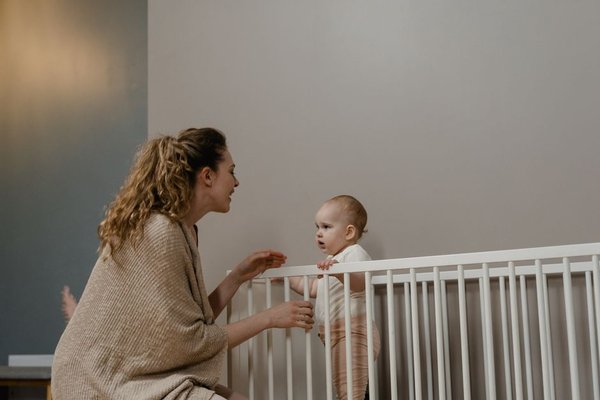
Early parenthood can make sleep feel complicated. You want your baby close and comfortable, yet tiredness can make you second-guess every blanket, sleeping position and temperature choice. The reassuring part is that safe sleep does not require expensive gadgets. UK guidance focuses on a few consistent habits that reduce the risk of sudden infant death syndrome (SIDS).
The same rules apply to naps and overnight sleep. Think of safer sleep as a repeatable setup rather than a one-off nursery decision.
The safest sleep setup for the first six months
Keep your baby close in a separate sleep space
For at least the first six months, the safest place for a baby to sleep is in the same room as a parent or carer, but in their own cot or Moses basket. This applies during the day and at night. Room-sharing makes it easier to respond to your baby while preserving a clear, separate surface designed for sleep.
Always start every sleep on the back
Place your baby on their back for every sleep, not on their side or front. If your baby rolls onto their front before they can roll both ways independently, gently return them to their back. Once they can roll from back to front and front to back by themselves, continue placing them down on their back, but you do not need to keep turning them throughout the night.
When using a blanket, place your baby with their feet near the foot of the cot so they are less likely to wriggle underneath the bedding.
Create a clear, flat and firm cot
Choose the right mattress
The mattress should be firm, flat, waterproof and the correct size for the cot or Moses basket. Your baby’s head should not sink deeply into it. Avoid angled, padded or moulded surfaces, even when products are marketed as helping reflux or improving sleep. Unless a healthcare professional gives specific medical advice, babies should sleep flat.
Keep soft and loose items out
A safe cot looks surprisingly empty. Do not add pillows, duvets, cot bumpers, soft toys, positioners, wedges, nests or cushioned sleeping pods. These items can cover a baby’s face, cause overheating or create a trapping hazard. A fitted sheet is enough beneath your baby.
If you use a baby sleeping bag, choose the correct size and tog for the room. It should fit securely around the shoulders, and no extra blanket should be added. If you use a blanket, choose a lightweight cellular blanket, tuck it in firmly and keep it below the shoulders.
Related reading such as a baby sleeping bag guide or choosing a cot mattress guide can help parents compare safe options without adding unnecessary products.
Prevent overheating
A room temperature of around 16°C to 20°C is generally considered comfortable and safe for sleeping babies. A room thermometer can help. Check your baby’s chest or the back of their neck. If the skin feels hot or sweaty, remove a layer. Cool hands and feet are common and do not necessarily mean your baby is cold.
Remove outdoor hats and extra clothing when you come indoors. Keep the cot away from radiators, heaters, direct sunlight, hot-water bottles and electric blankets. In warm weather, reduce clothing or use a lower-tog sleep bag rather than pointing a fan directly at the baby. A baby room temperature guide is a useful internal resource for seasonal sleepwear choices.
Plan for night feeds before you are exhausted
The safest place for your baby is their own cot or Moses basket before you go to sleep. Feeding often happens when you are already tired, so preparing the sleep space in advance can reduce the chance of accidentally falling asleep somewhere unsafe.
Consider a common 2am scenario: your baby wakes for a feed and you move to the sofa because you do not want to disturb anyone. Sofas and armchairs are dangerous because a baby can become trapped against cushions or an adult’s body. A safer plan is to feed in a suitable place, keep yourself alert, and return the baby to the clear cot before you sleep.
Know when bed-sharing is unsafe
A separate cot remains the safest choice. Do not share a bed with your baby if either adult smokes, has recently drunk alcohol, has taken recreational drugs, or has taken medicine that causes drowsiness. Bed-sharing should also be avoided if your baby was born before 37 weeks, weighed less than 2.5kg at birth, is unwell, or if you are extremely tired.
If bed-sharing might happen, remove pillows, sheets and adult bedding from the baby’s area, use a firm flat mattress, keep other children and pets out, and make sure the baby cannot fall or become trapped. Never leave a baby alone on an adult bed, and do not swaddle a baby while bed-sharing.
Apply safe sleep rules away from home
Car seats are designed for travel, not routine sleep. It is normal for a baby to fall asleep during a journey, but move them to a firm, flat sleep surface when you reach your destination. The same principle applies after a pram walk or a visit to relatives: check the surface, clear away loose items and place your baby on their back.
Keep the home smoke-free during pregnancy and after birth. Share the same instructions with anyone who puts your baby down for a nap. A newborn sleep routine guide may help with predictable habits, but routine should never override newborn safety.
Frequently asked questions
Can my baby sleep on their side?
No. Put your baby down on their back for every sleep. Side sleeping is unstable. Once your baby can roll both ways independently, continue starting sleep on the back and keep the cot clear.
Do I need a pillow for a flat head?
No. Pillows should not be used in a baby’s cot. Speak to your health visitor or GP if you are concerned about head shape. Supervised tummy time while your baby is awake can support development without adding unsafe items to the sleep space.
Is a sleep nest safe inside a cot?
NHS safer-sleep guidance advises against pods and nests because their raised or cushioned sides create a soft area around the baby. Use a firm, flat cot mattress with a fitted sheet instead.
When can my baby move into their own room?
UK guidance recommends keeping your baby’s cot or Moses basket in the same room as you for at least the first six months, for daytime and night-time sleep.
A simple routine is the safest routine
Safe sleep is built from a few repeatable choices: place your baby on their back, use a clear cot with a firm flat mattress, keep them in your room for the first six months, avoid smoke exposure and prevent overheating. Prepare for feeds and travel so tiredness does not push you towards a sofa, armchair or cluttered sleep space. When everyone caring for your baby follows the same setup every time, safer sleep becomes easier to manage and easier to trust.