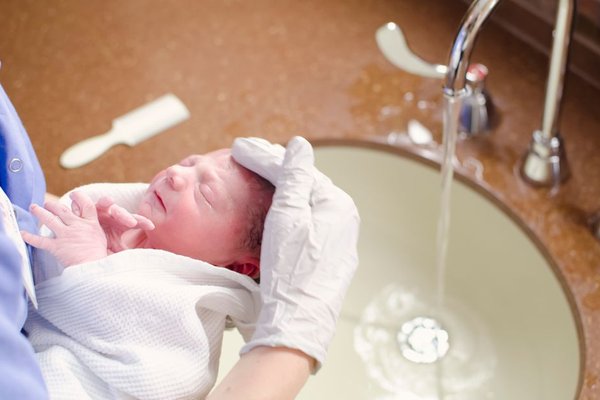
Bathing a newborn can feel nerve-racking the first few times. Your baby is tiny, slippery when wet and unable to support their own head, so the goal is not speed or a perfect routine. A calm setup, a secure hold and constant supervision matter far more. Once you know what to prepare and how to position your hands, bath time usually becomes much easier.
Newborns do not need a full bath every day. In the first weeks, washing the face, neck, hands and nappy area may be enough on many days. A full bath two or three times a week is usually fine, although you can bathe your baby more often if they enjoy it and their skin tolerates it well.
What to prepare before bathing a newborn
Get everything ready before you undress your baby. Have a baby bath or clean washing-up bowl, two towels, a clean nappy, clean clothes and cotton wool or a soft washcloth within reach. Keep the room comfortably warm because newborns lose heat quickly once undressed.
For the first month, plain water is usually all you need. Newborn skin is delicate and still developing its protective barrier, so there is no need to add lots of products. If you later use a cleanser, choose one specifically intended for babies and use only a small amount.
A practical tip is to prepare for the moment after the bath as carefully as the bath itself. Open the clean nappy, lay out the clothes and spread a towel beside you before you start. You will not then be trying to organise clothes while holding a wet baby.
How warm should a newborn bath be?
The water should feel comfortably warm, not hot. UK NHS guidance recommends running cold water first and then adding hot water, mixing it thoroughly so there are no hot patches. Test the water with your elbow or wrist; it should feel close to body temperature. If you use a bath thermometer, around 37°C is a sensible target.
You only need a shallow amount of water. Around 8 to 10 cm is enough for a newborn bath. More water does not make bathing easier, and even a small amount can be dangerous if a baby is left unattended.
How to bathe a newborn step by step
Start when your baby is calm
Choose a time when your baby is awake and reasonably content. Avoid bathing them when they are very hungry, exhausted or immediately after a feed. If your baby is already crying hard, it is fine to postpone the bath and try again later.
Wash the face and hair first
Keep your baby wrapped or partly dressed while you clean their face. Use plain warm water and gently wipe around the eyes from the nose outwards, using a fresh piece of cotton wool for each eye. Clean around the ears rather than inside them, and never put cotton buds into the ear canal.
If you wash your baby’s hair, support their head securely over the bath or bowl and use plain water. Dry the hair gently before removing the rest of their clothes so they do not become cold unnecessarily.
Use a secure hold in the bath
Support your baby’s head and shoulders with one forearm and use that hand to hold their upper arm. This gives you a stable grip while leaving your other hand free for newborn washing. Lower your baby gently into the water, feet first, while keeping the head above the surface.
Use your free hand to swish water gently over the body. Pay attention to skin folds around the neck, armpits, groin and thighs, where milk, sweat or nappy residue can collect. There is no need to scrub.
For baby bath safety, keep one hand supporting your baby throughout. Never leave a newborn alone in water, even for a few seconds, and do not rely on an older child or bath seat for supervision. If you need to leave the room, lift your baby out, wrap them in a towel and take them with you.
Lift, dry and dress your baby promptly
When the bath is finished, lift your baby out securely and place them straight onto a towel. Pat rather than rub the skin dry, especially between folds. Put on a clean nappy and clothes soon afterwards to help them stay warm.
What if the umbilical cord is still attached?
You do not have to delay all bathing until the cord stump falls off, but there is no need to soak or scrub it. If it becomes dirty with urine or stool, clean it gently with plain water and pat it dry. Ask your midwife, health visitor or GP for advice if the area becomes red, swollen, smelly or produces discharge.
Topping and tailing is also an easy alternative during the first days or weeks. It means cleaning the face, neck, hands and bottom with warm water without putting your baby in a bath, and it can be useful while you build confidence.
How to make bath time calmer
Keep the first few baths short and simple. Talk quietly to your baby, move slowly and avoid sudden changes of grip. If they cry, check the basics first: water temperature, room warmth, hunger, tiredness and whether they feel securely supported.
For example, if your baby becomes upset as soon as you undress them, keep their upper body wrapped in a warm towel while you wash the face and hair, then uncover them only when you are ready for the bath. Reducing the time spent naked can make the routine feel less abrupt.
Useful next topics include newborn nappy changing, umbilical cord care and newborn sleep basics.
Frequently asked questions
How often should you bathe a newborn?
Two or three full baths a week are usually enough. On other days, clean the face, neck, hands and nappy area as needed. Daily baths are not essential.
Can you bathe a newborn before the cord falls off?
Yes. Gentle bathing is possible, but keep the cord area clean and dry rather than scrubbing it. Topping and tailing until the stump falls off is also a simple option.
How long should a newborn bath last?
A few calm minutes is usually enough to wash a newborn thoroughly while limiting heat loss and overstimulation. There is no benefit in making the bath unnecessarily long.
What should I do if my baby hates the bath?
Stop if your baby becomes very distressed. Try again at a different time, make sure the room and water are comfortably warm, and keep the next bath shorter. Some babies need several attempts before bath time feels familiar.
A simple routine matters more than a perfect bath
Learning how to bathe a newborn is mostly about preparation and safe handling. Set up everything first, use comfortably warm water, support the head and shoulders securely, keep your baby’s face clear of the water and stay beside them from start to finish. With repetition, the movements that first feel awkward become familiar, and bath time can become a calm part of your baby’s care routine.