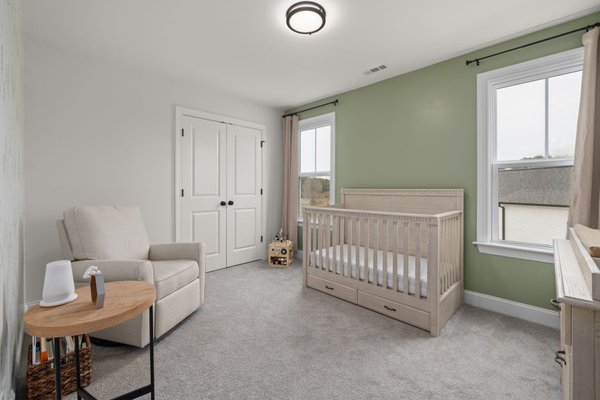
A box room nursery can feel like a puzzle, especially when the cot seems to fill half the floor before you add clothes or nappies. A small nursery needs a clear plan, fewer pieces and storage that works harder. The best small nursery room ideas for UK homes begin with accurate dimensions, an easy 3am route and furniture that can adapt.
NHS safer-sleep guidance says a baby should sleep in their own cot or Moses basket in the same room as a parent for the first six months. Your nursery may initially work mainly as a changing, feeding and storage room, then become the baby’s sleeping space later. Designing for that transition prevents overcrowding.
Plan the Nursery Around Movement
Measure every usable centimetre
Measure the floor, ceiling height, radiator depth, door swing and window position. A wall that appears long enough for a cot may become unusable once you account for a radiator, chimney breast or inward-opening door. Draw the room and mark each item’s footprint before buying.
In a room measuring roughly 2.1 by 2.4 metres, a cot bed may fit, but adding a deep changing table and freestanding wardrobe can destroy the walkway. Replacing the changing table with a shallow chest of drawers and removable changing top may free enough space for comfortable movement.
Plan for what you need now
Keep newborn clothes, nappies and muslins within reach. Toys, keepsakes and larger clothing sizes can sit higher up or outside the room, keeping the baby room practical rather than crowded.
Choose Compact Nursery Furniture Carefully
Position the cot first
The cot is usually the least flexible item, so place it before anything else. Keep it away from radiators, blind cords and climbable furniture near windows. Use a firm, flat mattress that fits correctly, and keep the sleep space clear of pillows, bumpers, soft toys and loose items.
A compact cot may suit the early months, but check its expected lifespan. In some rooms, a standard cot bed along the longest uninterrupted wall is more practical because it avoids another purchase later. In others, the extra floor space created by a smaller cot matters more.
Combine changing and clothes storage
A dedicated changing unit often has a short useful life. A sturdy chest of drawers with a secure removable changing top can store supplies now, then become ordinary furniture later. Choose a shallow model whose drawers open without hitting the cot or blocking the doorway.
Keep nappies, wipes, vests, muslins and spare sleepwear in the top drawer. Store the next clothing size below and less-used items at the bottom. Nursery storage ideas work best when organised by frequency of use rather than by item type alone.
Skip the oversized wardrobe
Baby clothes are small, so a large wardrobe can dominate a compact nursery. A narrow wardrobe, shallow rail in an alcove or drawer-and-hanging combination may be enough. Improve an existing cupboard with a second rail, adjustable shelves or labelled boxes.
Use Walls and Awkward Areas
Take storage upwards
High shelves can hold keepsakes, spare bedding and outgrown clothes, leaving lower storage for everyday items. Wall-mounted book ledges are shallower than standard bookcases and add colour without taking floor space. Fix all wall storage securely and position it so nothing could fall into the cot.
Use the door and under-cot area
The back of the door can hold a slim organiser or lightweight laundry bag, provided it closes properly and has no loose cords. If the cot has an integrated drawer, use it for larger clothes or spare bedding. Fitted drawers or lidded containers are easier to manage than loose boxes.
Make Small Nursery Decor Feel Calm
Keep the palette connected
Pale colours reflect light, but a small nursery does not have to be white. Warm off-white, muted sage, soft blue-grey or gentle clay can make the room feel settled. Using one wall colour across awkward angles often makes a box room feel less fragmented than several contrasting sections.
Add personality through a few repeated details, such as timber frames, woven baskets or one accent colour. One framed print, a washable rug and a simple mobile positioned safely away from the cot can be more effective than filling every wall.
Control light safely
A blackout blind can help manage daylight, but cord safety matters. Choose a cordless or concealed-cord design where possible. Any existing cord should be secured with the correct safety device and kept fully out of reach. Do not place the cot or a climbable chair directly beneath the window.
Free the floor with wall lighting
A ceiling light plus a dimmable wall light provides useful layers without sacrificing space to a floor lamp. Warm, low lighting is useful during feeds and changes because it avoids switching on a harsh main light.
Create a One-Handed Care Zone
The most successful nursery design works when one arm is occupied. Place the changing surface, laundry bag, nappies and clean clothes within an adult’s reach, while keeping creams, medicines and small objects away from the baby. Test the layout by imagining a complete change without walking across the room.
A compact trolley can help if it has a stable base and locking castors, although it should be reassessed once a child becomes mobile. A simpler option is to divide one drawer between changing, feeding support and bedtime supplies.
Design for the Next Stage
Choose furniture that can change purpose. A chest used for changing can later store toys, book ledges can become display shelves and a feeding chair can move elsewhere. Avoid matching sets that are too large; individual pieces with the right dimensions usually create a better layout in small spaces.
Review the nursery as your baby grows. Lower the cot mattress at the appropriate stage, remove reachable objects and reassess shelves, cords and furniture anchoring once pulling and climbing begin.
Natural related topics include small bedroom storage ideas, choosing nursery paint colours and baby-proofing a compact home.
Frequently Asked Questions
How do I fit a nursery into a UK box room?
Start with the cot, then add one dual-purpose storage piece rather than a complete furniture set. Use shallow wall storage and contained under-cot storage while preserving a clear route from the door to the cot.
What furniture is essential in a small nursery?
The essentials are a safe sleep space, practical clothing and nappy storage, and a suitable changing surface. A wardrobe, bookcase and large nursing chair are optional.
How can I make a small nursery look bigger?
Keep the floor visible, use a connected colour palette, choose correctly proportioned furniture and reduce decorative clutter. Wall lighting and shallow shelves also help.
Can the cot go under a window?
It is generally better to place the cot away from windows, blind cords and nearby climbable furniture. Where space is limited, resolve cord safety, draught, heat and access concerns before finalising the layout.
A Small Nursery Can Work Beautifully
A compact nursery becomes easier to design when every item earns its place. Start with accurate measurements, protect the cot area, choose flexible furniture and organise supplies around real routines. With thoughtful storage, a UK box room can become a practical space that adapts as your baby grows.