Hiccups can look dramatic in a newborn just as a feed ends. The tiny chest and belly may give a rhythmic jump, followed by the familiar “hic” sound. In most healthy babies, though, newborn hiccups after feeding are a normal reflex rather than a sign that something is wrong. They are common in early infancy and often settle on their own.
Feeding can make hiccups more noticeable because a baby’s stomach fills quickly, breathing and swallowing are still becoming coordinated, and some air may be swallowed with milk. Understanding the pattern makes it easier to know when simple comfort measures are enough and when feeding symptoms deserve a closer look.
Why newborns hiccup after a feed
A hiccup begins with an involuntary spasm of the diaphragm, the breathing muscle beneath the lungs. That spasm is followed by a brief closure near the vocal cords, creating the “hic” sound. Babies can hiccup before birth, so the reflex itself is not new after delivery.
After feeding, several ordinary things may trigger it. A full stomach can press upward toward the diaphragm. Fast swallowing may bring extra air into the stomach. A very hungry baby may gulp quickly, while a strong milk flow or fast bottle teat can make pacing harder. This helps explain why baby hiccups after feeding may appear after one feed but not another.
Are feeding hiccups a sign of poor digestion?
Usually, no. Newborn digestion is still maturing, and feeding involves a small stomach plus developing coordination between sucking, swallowing and breathing. Hiccups can occur alongside burping or small amounts of spit-up without meaning that a baby cannot digest milk properly.
Reflux can sometimes be part of the picture. Mild reflux is common because the muscle between the oesophagus and stomach is still developing. Some babies with reflux hiccup, cough, gulp or bring up milk during or after feeds. If a baby is comfortable, feeds well and gains weight as expected, occasional hiccups or spit-up are usually not concerning. Frequent distress, feeding refusal or poor growth deserves medical advice.
What to do when hiccups start
If your baby seems content, you may not need to do anything. Hiccups often stop without treatment. When they begin during a feed, pause briefly, bring your baby into a more upright position, support the head and neck, and offer a chance to burp. A calm pause can also slow a baby who has been gulping.
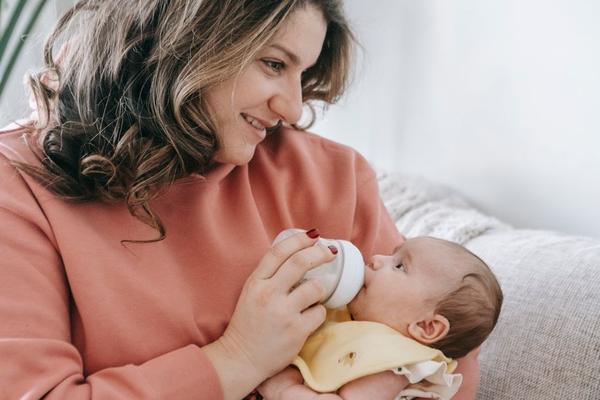
For example, imagine a newborn who starts hiccupping halfway through a bottle and becomes fussy. Rather than encouraging the baby to finish quickly, pause the feed, hold them upright against your chest and gently rub or pat their back. Once calm, resume more slowly. This addresses swallowed air and fast feeding without treating normal hiccups as an illness.
Feed before your baby is frantic with hunger
Babies who are extremely hungry may suck and swallow very quickly. Offering a feed when you notice earlier hunger cues can make feeding calmer and may reduce gulping and swallowed air.
Check the feeding pace
With bottle feeding, make sure milk is not flowing so quickly that your baby coughs, splutters or struggles to pause. Follow your baby’s cues rather than encouraging them to empty the bottle. With breastfeeding, frequent coughing, pulling away or difficulty managing a strong flow may be worth discussing with a lactation professional or clinician.
Use gentle burping breaks
Some babies benefit from a burping pause during a feed, while others need little burping. Keep it gentle. There is no need for hard patting or prolonged attempts if your baby is comfortable and does not burp.
What not to do for newborn hiccups
Adult hiccup tricks are not appropriate for a newborn. Do not frighten your baby, hold their breath, give unprescribed remedies or offer extra water simply to stop hiccups. Newborn feeding should follow advice suitable for the baby’s age and feeding method.
Do not change safe sleep practices because of hiccups or ordinary reflux. Babies should be placed on their backs on a firm, flat sleep surface. Propping up a cot or positioning a baby on the side or stomach to prevent hiccups or spit-up is not recommended for routine sleep.
When hiccups may need more attention
The hiccups themselves are usually harmless, but the symptoms around them matter. Speak with your baby’s healthcare professional if hiccups regularly interfere with feeding, your baby repeatedly refuses feeds, seems persistently uncomfortable, vomits frequently, or is not gaining weight as expected. Also ask for advice if feeds are often accompanied by coughing, choking or significant distress.
Seek urgent medical care if your newborn has difficulty breathing, develops a blue or grey colour around the lips or face, becomes unusually difficult to wake, or otherwise appears seriously unwell. These are not typical features of simple feeding hiccups.
Look at the pattern, not one episode
A single bout of newborn hiccups rarely tells you much. A pattern is more useful. Notice whether hiccups happen mainly after fast feeds, improve with a burping pause, or occur with spit-up, crying or feeding refusal. If you seek medical advice, these details can help a clinician understand what is happening.
Useful related topics for parents include newborn feeding cues, how to burp a newborn, and newborn spit-up versus vomiting. Learning those basics can make normal post-feed behaviour easier to recognise.
Frequently asked questions
Is it normal for a newborn to hiccup after every feeding?
Some newborns hiccup very often, including after many feeds. If your baby is comfortable, feeding effectively and growing well, frequent hiccups can still be normal. Mention the pattern to your clinician if it disrupts feeds or comes with distress, vomiting or poor weight gain.
Should I keep feeding a baby who has hiccups?
If hiccups begin during a feed, try a brief pause, change your baby’s position and offer a chance to burp. Once your baby is calm, feeding can usually continue. Follow hunger and fullness cues rather than trying to make your baby finish a set amount.
Do hiccups mean my baby has reflux?
Not by themselves. Hiccups can happen without troublesome reflux. Reflux is more likely to be relevant when hiccups occur with repeated spit-up or vomiting, discomfort, feeding refusal, coughing, gulping or poor weight gain.
How long should newborn hiccups last?
Many episodes are brief and stop on their own. The duration matters less than how your baby is behaving. A comfortable baby who feeds normally is different from a baby whose hiccups repeatedly interrupt feeding or appear with other concerning symptoms.
A calm response is usually enough
Newborn hiccups after feeding are one of those baby behaviours that can look more alarming than they feel. Most episodes reflect a normal diaphragm reflex combined with a full stomach, swallowed air or immature feeding coordination. Slowing the pace, pausing to burp and keeping your baby comfortably upright for a short period after a feed may help.
The best guide is the whole baby, not the hiccup alone. If your newborn is comfortable, feeding well and growing as expected, hiccups are usually just part of early infancy. If the pattern comes with pain, feeding difficulty, repeated vomiting, breathing problems or poor growth, contact a healthcare professional for individual advice.