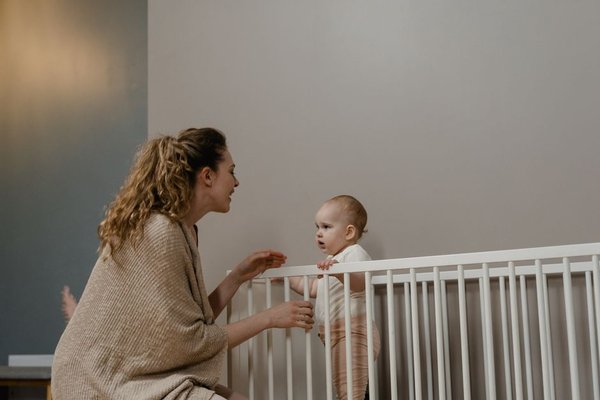
The first year of a baby’s life can feel both wonderfully simple and surprisingly full. A soft blanket on the floor, a wooden spoon in the hand, a quiet moment of eye contact—these small things often matter more than any expensive toy. That is exactly why Montessori play feels so natural for babies. It respects their curiosity, their pace, and their need to discover the world through real experiences.
Montessori play ideas for babies are not about creating a perfect nursery or buying a shelf full of special materials. At its heart, Montessori is about observing your baby, offering simple choices, and giving them space to explore safely. Babies learn by looking, touching, mouthing, reaching, crawling, repeating, and sometimes simply watching. When play follows their natural development, it becomes calmer, richer, and more meaningful.
Understanding Montessori Play for Babies
Montessori play is built around independence, concentration, movement, and sensory discovery. For babies, this does not mean pushing them to do things early. In fact, it usually means the opposite. It means slowing down enough to notice what they are ready for.
A newborn who stares at shadows on the wall is already learning. A four-month-old who reaches for a soft cloth is practicing coordination. A crawling baby who pulls a basket from a low shelf is solving a little problem. These moments may look ordinary, but they are deeply important.
The Montessori approach encourages parents to prepare a simple environment where babies can explore without constant interruption. Instead of shaking toys in their face or entertaining them every second, you offer a few thoughtful materials and let them engage in their own way. It sounds almost too quiet at first, but many parents are surprised by how focused babies can become when the space is calm and uncluttered.
Creating a Calm Play Space
A Montessori-inspired play area does not need to be large. A soft rug, a low mirror, a few carefully chosen objects, and enough room for movement can be enough. The goal is to make the space inviting without overwhelming the baby.
Babies notice more than we think. Too many colors, sounds, and toys can make it harder for them to focus. A smaller selection of objects helps them explore more deeply. You might place two or three items on a low shelf or in a shallow basket and rotate them every few days. This keeps the space fresh without creating clutter.
A floor bed or movement mat can also support natural development. When babies spend time on the floor, they learn to stretch, roll, push, pivot, and eventually crawl. It gives them freedom to understand their body. Of course, safety matters first, so the area should be clean, soft enough for comfort, and free from anything sharp, loose, or small enough to swallow.
Simple Visual Play for Newborns
In the earliest weeks, babies are drawn to contrast, faces, light, and gentle movement. Their vision is still developing, so simple visual play works beautifully.
A black-and-white image placed near the changing area can give your baby something to study. A soft mobile with slow, natural movement can catch their attention without overstimulating them. Even your face is one of the best “materials” a newborn can explore. When you speak softly, pause, smile, and let them respond with their eyes or tiny movements, you are building connection and attention.
This stage is not about doing more. It is about offering a peaceful world that your baby can slowly take in. A few quiet minutes of looking and listening are enough.
Tummy Time with a Montessori Feel
Tummy time is often treated like a task, but it can become a gentle play experience. Instead of placing a baby on the floor and waiting for frustration, try making the space interesting and comfortable.
A low mirror can encourage babies to lift their head and look. A small rattle placed slightly to one side may invite reaching. A rolled towel under the chest can help younger babies feel supported for a short time. You can also lie facing your baby, making eye contact and speaking calmly. Often, your presence is more motivating than any toy.
The Montessori spirit here is patience. Some babies enjoy tummy time quickly, while others need shorter sessions. A few minutes several times a day can be better than one long stretch that ends in tears.
Treasure Baskets for Sensory Discovery
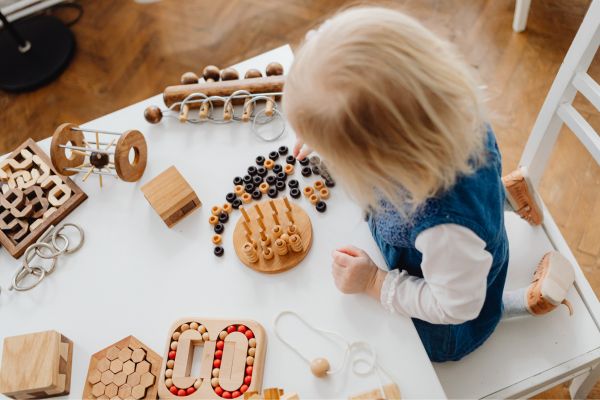
As babies begin grasping and sitting, treasure baskets become one of the loveliest Montessori play ideas for babies. A treasure basket is simply a shallow basket filled with safe, everyday objects that offer different textures, weights, shapes, and sounds.
You might include a soft cloth, a wooden ring, a large metal spoon, a silicone cup, a smooth brush, or a natural sponge. The objects should be large enough not to be choking hazards and safe for mouthing, because babies explore with their mouths as much as their hands.
What makes a treasure basket special is that it uses real materials. Babies learn that wood feels different from metal, fabric bends while a spoon does not, and some objects make a soft sound when tapped. This kind of sensory play is simple, but it gives babies rich information about the real world.
Grasping and Reaching Activities
Around three to six months, many babies become fascinated with their hands. They stare at them, bring them together, reach toward objects, and practice holding things. Montessori play supports this by offering objects that are easy to grasp and interesting to explore.
A lightweight rattle, a wooden ring, a soft ball, or a small cloth can encourage reaching. Place the object just close enough that your baby can work for it without becoming too frustrated. That little effort matters. It helps them understand distance, movement, and cause and effect.
Try not to place toys directly into your baby’s hand every time. When possible, give them the chance to reach, touch, and choose. It may take longer, but that is part of the learning.
Object Permanence Play
At some point, babies begin to understand that things still exist even when they cannot see them. This is called object permanence, and it can be explored through gentle games.
A simple cloth peekaboo game is a wonderful start. Hide your face behind a scarf, then slowly reveal yourself. Later, you can hide a toy partially under a cloth and let your baby pull it out. Once they are ready, a small object permanence box can also be useful, where a ball drops into a hole and appears again in a tray.
This kind of play supports memory, focus, and problem-solving. It also brings plenty of delight. Babies love discovering that something “gone” can come back.
Montessori Play Ideas for Babies Who Can Sit
Once a baby can sit steadily, their play world opens up. They can use both hands more freely, look around, and explore objects with more control.
At this stage, simple posting activities can be very engaging. A baby-safe container and large wooden rings or soft blocks can invite them to place objects in and take them out again. A basket filled with fabric squares can become a long, quiet activity as they pull each piece out and examine it. Nesting cups, large balls, and textured blocks can also encourage hand coordination.
The key is to keep the activity open-ended. There does not need to be one “correct” way to play. Babies may bang, mouth, drop, pass objects from hand to hand, or repeat the same action again and again. Repetition is not boredom. It is practice.
Encouraging Movement Naturally
Montessori play gives great importance to free movement. Babies do not need to be rushed into sitting, standing, or walking. They need chances to move in ways their bodies are ready for.
For a rolling baby, place interesting objects slightly to the side. For a crawling baby, create a safe path with a soft tunnel, a low cushion, or a favorite toy just out of reach. For a baby who pulls to stand, a sturdy low surface can support safe practice.
Movement play should feel inviting, not forced. When babies are allowed to move freely, they build strength, balance, and confidence. They also learn through trial and error, which is a quiet but powerful teacher.
Practical Life Play for Older Babies
As babies approach the end of their first year, they often become very interested in everyday life. They want to touch the spoon, hold the cup, wipe the tray, open the drawer, and copy what adults do.
This is a beautiful time to introduce simple practical life activities. Let your baby hold a soft cloth while you wipe the table. Offer a small spoon during meals. Give them a basket with socks to pull out and explore while you fold laundry. Allow them to place a toy into a basket when playtime ends, even if they take it right back out again.
These small tasks help babies feel included. They also build coordination and independence in a natural way. Montessori does not separate learning from daily life; it sees daily life as one of the richest learning spaces.
Choosing Toys with Care
Montessori-style toys for babies are usually simple, beautiful, and purposeful. They often use natural materials, gentle colors, and clear functions. However, the toy itself is not the most important part. What matters is whether it matches the baby’s developmental stage and invites active exploration.
A toy that does one simple thing is often better than one that flashes, sings, and moves on its own. Babies benefit when they are the ones creating the action. They shake the rattle and hear the sound. They drop the ball and watch it roll. They pull the cloth and feel the texture change in their hands.
When choosing toys, think less about entertainment and more about engagement. A baby does not need to be constantly amused. They need to be allowed to discover.
Following the Baby’s Lead
Perhaps the most important Montessori idea is observation. Watch your baby before deciding what to offer next. Are they reaching more? Mouthing everything? Trying to crawl? Fascinated by opening and closing? Dropping objects from the high chair again and again?
These repeated behaviors are clues. They show what your baby is working on. Instead of stopping every repetition, you can offer a safe way to explore it. A baby who loves dropping things might enjoy placing soft balls into a basket. A baby who pulls tissues from a box might enjoy fabric squares in a container. A baby who bangs objects might need safe items that make different sounds when tapped.
When you follow your baby’s lead, play becomes less about planning perfect activities and more about responding with attention.
A Gentle Way to Support Early Learning
Montessori play ideas for babies are beautifully simple because babies themselves are already busy learning. They do not need crowded schedules, loud toys, or constant adult direction. They need safety, warmth, time, and a few meaningful materials that invite exploration.
A calm play space, everyday objects, free movement, sensory baskets, and practical life moments can all support your baby’s development in a natural way. More importantly, they help you see your baby as capable from the very beginning. Not capable in a rushed or pressured sense, but capable of curiosity, concentration, effort, and discovery.
In the end, Montessori play is less about doing everything perfectly and more about being present. It asks us to slow down, watch closely, and trust the small moments. A baby reaching for a wooden ring, studying a shadow, or pulling cloth from a basket is not just passing time. They are meeting the world, one careful discovery at a time.