Bath time can feel surprisingly serious when there is a tiny baby involved. What should be a soft, simple moment can suddenly bring up a dozen small worries. Is the water too warm? Too cool? Should the room be warmer? Will the baby cry because the temperature feels strange? These are normal questions, especially for new parents who are still learning their baby’s cues.
The right baby bath temperature is not about making the water feel cozy for an adult. Babies have delicate skin and less control over their body temperature, so bath water that feels pleasantly warm to grown-up hands may be too hot for them. On the other hand, water that is too cool can make a baby uncomfortable very quickly. The goal is gentle warmth, close to body temperature, so the bath feels calm rather than shocking.
Why Baby Bath Temperature Matters So Much
A baby’s skin is thinner and more sensitive than adult skin. This means heat reaches their skin faster, and they can become uncomfortable or even burned more easily. Babies also lose body heat more quickly after a bath, especially when they are wet and uncovered. That is why bath temperature is not just a small detail. It is one of the most important parts of safe baby bathing.
Many parents instinctively test bath water with their fingers, but fingers are not always the best guide. Hands can tolerate warmer water than a baby’s body can. A better habit is to test the water with your elbow or inner wrist, where the skin is more sensitive. The water should feel warm and comfortable, not hot, sharp, or steamy. If there is any doubt, cooler is safer than hotter.
The Ideal Baby Bath Water Temperature
The ideal baby bath water temperature is usually around 37 to 38 degrees Celsius, or about 98.6 to 100 degrees Fahrenheit. In simple terms, the water should feel close to normal body temperature. It should not feel hot when touched, and it should not make the skin turn pink quickly.
A bath thermometer can be helpful, especially in the early weeks when parents are still gaining confidence. It gives a clear reading and removes some of the guesswork. Still, a thermometer should not replace common sense. Always stir the water well and test it yourself before placing the baby in the bath. Hot spots can form if warm water is added unevenly, particularly in small tubs.
The phrase “warm, not hot” is easy to remember. If the water feels relaxing in the way an adult bath feels, it may already be too warm for a baby. Baby bath water should feel mild, soft, and barely warmer than the skin.
Preparing the Bath Before Baby Goes In
The safest bath begins before the baby is undressed. Gather everything first: towel, clean diaper, fresh clothes, washcloth, and any mild baby cleanser you plan to use. Once the baby is in the bath, you should not need to step away even for a moment.
Fill the bath with a small amount of water before bringing the baby over. For newborns and young babies, only a few inches of water are enough. Add cold water first, then warm water, and mix it thoroughly. This simple order helps reduce the chance of the water becoming too hot too quickly.
Avoid putting the baby into the bath while the tap is still running. Water temperature can change suddenly, and what starts as warm can quickly become too hot. Running water can also make it harder to control the depth of the bath, especially when a parent is tired or distracted.
How to Test the Water Without Overthinking It
Testing bath water should become a quiet little routine. Swirl the water around with your hand so the temperature is even. Then dip your elbow or inner wrist into the water. Hold it there for a few seconds, not just a quick touch. The water should feel comfortably warm, almost neutral.
If it feels hot, add cool water and mix again. If it feels chilly, add a little warm water before the baby goes in, then test again. Never add hot water while the baby is already sitting in the bath. Even a small stream of hot water can cause harm if it touches the baby’s skin directly.
Some parents like using a thermometer every time, while others use it only in the beginning. Either approach can work. What matters most is consistency. Babies thrive on calm, predictable care, and parents become more confident when the bath routine feels steady.
Keeping the Room Warm and Comfortable
Water temperature is only one part of bath comfort. The room matters too. A baby can feel cold quickly after leaving warm water, especially if the air is cool or there is a draft. Before bath time, make sure the room feels comfortably warm. Close windows, turn off strong fans, and keep the towel within arm’s reach.
After the bath, wrap the baby right away, including the head if the baby is very young. Pat the skin dry gently instead of rubbing. Pay attention to little folds around the neck, thighs, and underarms, where moisture can stay hidden. The smoother the transition from bath to towel to clothes, the less likely the baby is to become upset.
For some babies, a bath is soothing. For others, it takes time. A baby who cries during bathing may not hate baths at all. The water may be slightly too cool, the room may feel chilly, or the baby may simply dislike being uncovered. Small adjustments often make a big difference.
Signs the Bath Water May Be Too Hot or Too Cold
A baby cannot say, “This is too warm,” but their body language can tell you plenty. If the water is too hot, the baby may cry suddenly, pull away, become red in the skin, or seem startled and tense. If the water is too cold, the baby may shiver, curl up tightly, cry, or look uncomfortable soon after entering the bath.
Sometimes parents worry because the baby’s hands or feet feel cool during or after a bath. Babies often have cooler hands and feet, so it is better to check the chest, back, or tummy for a more accurate sense of warmth. Still, a shivering baby should be taken out, wrapped, and warmed gently.
The bath does not need to last long. For newborns, a few minutes is usually enough. As babies grow and begin to enjoy splashing, bath time may become longer, but comfort and safety should always come first.
Common Mistakes Parents Make With Bath Temperature
One common mistake is trusting adult comfort. Adults often enjoy water that is much warmer than what is safe for a baby. Another mistake is forgetting to stir the water after adding warm water. A baby tub is small, and temperature can vary from one side to another.
Parents may also focus only on the water and forget the air. A perfectly warm bath can still feel unpleasant if the room is cold or the towel is far away. Bath time works best when the whole setup is ready before the baby is undressed.
Another easy mistake is rushing. When a baby is crying, it is tempting to move quickly and skip small checks. But a few seconds spent testing the water can prevent discomfort and help bath time feel calmer for everyone.
Bath Temperature for Newborns Compared With Older Babies
Newborns need extra care because they are still learning to regulate body temperature. Their baths should be short, warm, and simple. Many newborns do not need a full bath every day. Gentle wiping and occasional baths are often enough, especially in the first weeks.
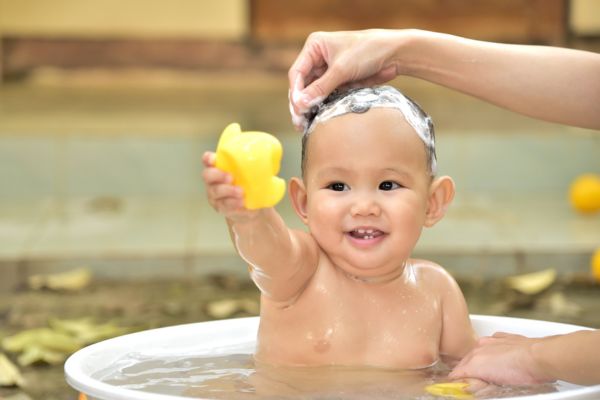
Older babies may become more active in the bath. They may splash, kick, reach for toys, and enjoy the water more. Even then, the same baby bath temperature guidance applies. The water should stay warm but not hot, and the baby should never be left alone. As babies grow more curious, supervision becomes even more important, not less.
Creating a Calm Bath Routine
A calm routine can make bath temperature easier to manage. Choose a time when you are not rushed. Some families prefer evening baths because warm water helps signal the end of the day. Others bathe the baby earlier, when everyone has more energy. There is no perfect time. The best time is the one that lets you stay relaxed and attentive.
Keep your touch steady and your voice soft. Lower the baby into the water slowly, supporting the head and neck if they are still very young. Wash gently, starting with cleaner areas and saving the diaper area for last. Use mild products sparingly, because a baby’s skin does not need much.
Over time, the small steps become familiar. Fill, mix, test, undress, bathe, wrap, dry, dress. The more predictable it feels, the less stressful it becomes.
Conclusion
The ideal baby bath water temperature is warm, gentle, and close to body temperature. It should never feel hot, steamy, or sharp against the skin. A thermometer can help, but careful testing with the elbow or inner wrist is still an important habit. Just as important are the details around the bath: a warm room, a towel nearby, a short bathing time, and steady supervision from start to finish.
Bathing a baby is one of those parenting tasks that feels big at first and ordinary later. With a little practice, checking the water becomes second nature. The aim is not a perfect bath every time. It is a safe, comfortable moment where the baby feels secure and the parent feels a little more confident too.